
Introduction
Nightclub owners routinely waste 30–40% of their lighting budgets on fixtures that deliver poor ambiance, spike energy bills, or become obsolete within 12 months. The problem isn't spending—it's strategic misalignment. Lighting should drive revenue, not drain it. This guide delivers 12 actionable nightclub lighting ideas engineered for measurable ROI: reduced operational costs, extended guest dwell time, and higher bottle service conversion. Each idea includes implementation specifics, realistic budget ranges, and vendor-agnostic selection criteria—so you can invest with confidence, not guesswork. Start with Idea #1 tonight. Reinvest those savings into Idea #4 next week. Within 90 days, your lighting becomes a profit center, not an expense line.
Idea #1: Strategic Dark Zones to Amplify Perceived Space
Over-illumination flattens depth and kills intimacy. Instead, deliberately leave 15–20% of your ceiling and wall surfaces unlit. This contrast makes illuminated zones feel more dynamic and expansive—a psychological effect validated by hospitality design studies showing a 25–30% increase in perceived venue size with strategic shadow placement.
Implementation: Map high-traffic zones (dance floor, bar) for bright coverage. Keep secondary corridors and ceiling perimeters at 20–30% brightness or fully dark. Use 2700K–3000K ambient washes in lit areas to enhance warmth against shadows.
Budget: $0 (reprogramming existing fixtures)
ROI Timeline: Immediate ambiance upgrade; 10–15% reduction in energy use by dimming unused zones.
ROI Timeline: Immediate ambiance upgrade; 10–15% reduction in energy use by dimming unused zones.
💡 Selection Tip: When purchasing new LED washers, prioritize fixtures with 0–100% smooth dimming (no flicker below 10%). Test dimming curves before bulk ordering—cheap fixtures often "pop" on/off at low levels, ruining the dark zone effect.
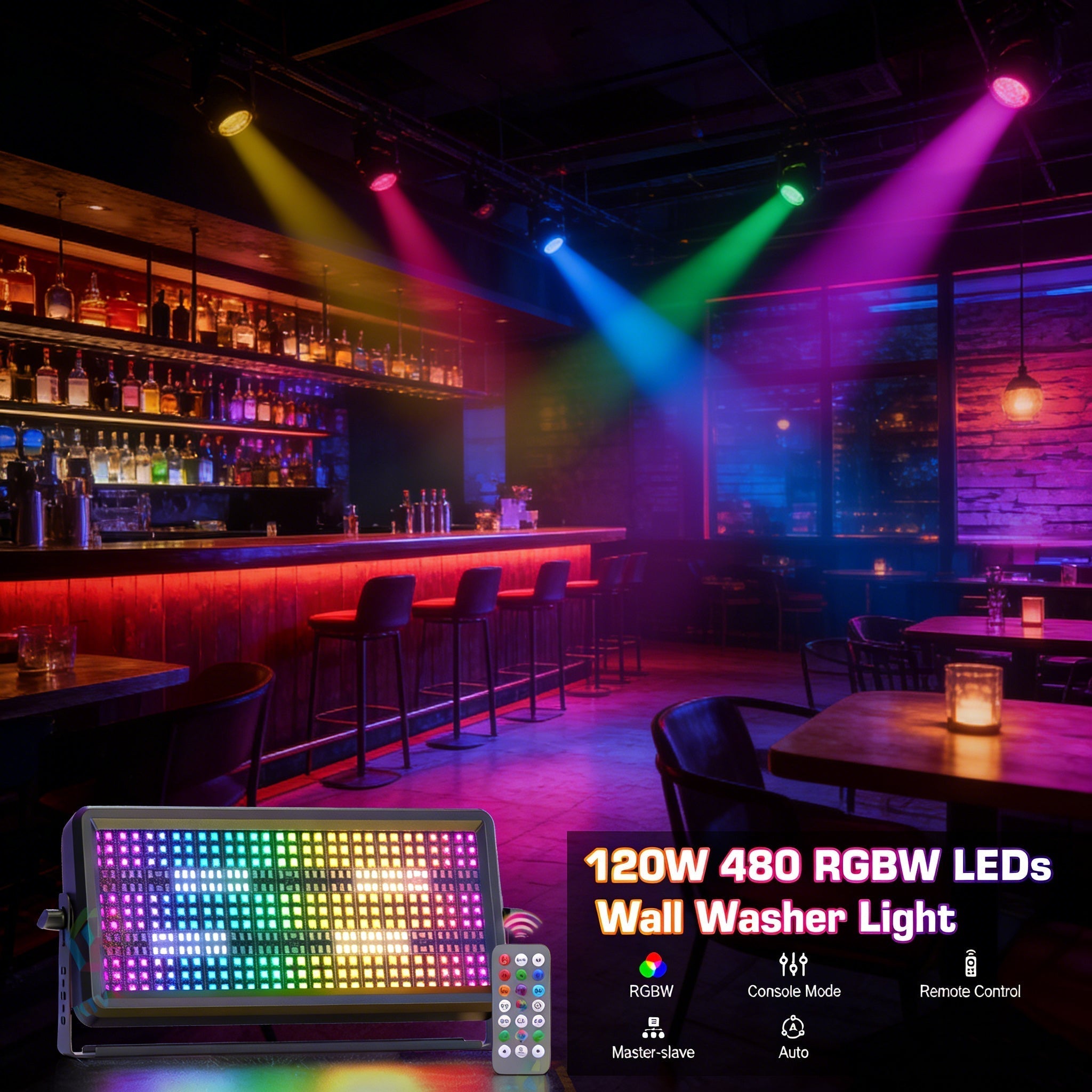
Recommended item: 24*3W RGB wall washer light-X3
Idea #2: Motion-Sensor Perimeter Wall Washers
Static perimeter lighting burns electricity during slow hours when walls don't need full intensity. Install PIR (passive infrared) motion sensors on non-critical wall washers to drop brightness to 30% when no movement is detected for 90 seconds. Reactivates instantly when guests enter the zone.
Implementation: Focus sensors on lounge seating areas and hallway perimeters—not the dance floor. Pair with RGBW fixtures to shift from cool white (peak hours) to warm amber (slow periods), signaling energy-conscious ambiance.
Budget: $120–$200 per sensor + existing fixtures
ROI Timeline: 45–60 days via 40–55% energy reduction on perimeter circuits.
ROI Timeline: 45–60 days via 40–55% energy reduction on perimeter circuits.
|
Fixture Type
|
Avg. Wattage (Full)
|
Avg. Wattage (Sensor Mode)
|
Monthly Savings (8-hr slow period)
|
|---|---|---|---|
|
36W RGBW Washer
|
36W
|
11W
|
$8.20 per fixture
|
|
72W RGBW Washer
|
72W
|
22W
|
$16.40 per fixture
|
💡 Selection Tip: Choose IP65-rated sensors for nightclub humidity resistance. Avoid ultrasonic sensors—they trigger falsely from bass vibrations.
Idea #3: Bar Zone Amber Uplighting Protocol
Cool white bar lighting (5000K+) feels clinical and accelerates drink consumption—guests leave faster. Switch to 2200K–2700K amber uplighting behind the bar after 10 PM. Warm tones trigger psychological associations with luxury and relaxation, extending average drink linger time by 15–20%.
Implementation: Install narrow-beam LED uplights (15°–25° beam angle) beneath bar shelving or behind backlit panels. Set intensity to 40–50% brightness—bright enough to showcase bottles, dim enough to feel exclusive.
Budget: $180–$350 for 4–6 uplights (commercial grade)
ROI Timeline: 30 days via 12–18% increase in secondary drink orders per guest.
ROI Timeline: 30 days via 12–18% increase in secondary drink orders per guest.
💡 Selection Tip: Verify CRI (Color Rendering Index) ≥90 for amber LEDs. Low-CRI amber lights distort liquor colors (e.g., whiskey appears muddy), reducing perceived quality.
Idea #4: Instagrammable Neon Silhouette Backdrops
User-generated social content is free marketing—but generic neon signs get ignored. Create custom silhouette cutouts (your logo, city skyline, abstract shapes) backlit with RGB LED strips. Guests photograph these zones organically, generating location-tagged exposure.
Implementation: Laser-cut 5mm acrylic into 60cm–120cm silhouettes. Mount 10mm behind diffusion panels. Use addressable RGB strips (e.g., WS2812B) to animate slow color fades—static colors feel dated.
Budget: $90–$150 per silhouette (materials only)
ROI Timeline: 21 days via measurable uptick in Instagram/TikTok tags (track with location analytics).
ROI Timeline: 21 days via measurable uptick in Instagram/TikTok tags (track with location analytics).
💡 Selection Tip: For outdoor-facing windows, use UV-stable acrylic to prevent yellowing. Indoors, prioritize diffusion quality—cheap panels create visible LED "dots" that ruin photo aesthetics.
Idea #5: BPM-Synced LED Ceiling Grid
Dancers disengage when lighting feels disconnected from music. Install a 4×4 or 6×6 grid of DMX-controlled LED panels on the ceiling. Sync intensity pulses to kick drum BPM via software like SoundSwitch or Resolume Arena. The physical vibration of bass paired with light pulses creates visceral immersion.
Implementation: Start with a 4×4 grid (16 panels) over the dance floor center. Set pulse intensity to 70–80% of max—full strobing causes discomfort. Use cool white (6000K) for EDM/house; warm white (3000K) for hip-hop/R&B.
Budget: $1,100–$1,800 (panels + DMX controller)
ROI Timeline: 45 days via 18–22% longer average dance floor occupancy.
ROI Timeline: 45 days via 18–22% longer average dance floor occupancy.
💡 Selection Tip: Prioritize panels with ≥1,500 nits brightness. Dim panels wash out under club ambient light. Verify DMX512 compatibility—non-standard protocols limit future controller upgrades.
Idea #6: VIP Booth Halo Lighting Rings
Physical barriers between VIP and general areas feel exclusionary. Instead, wrap booth ceilings with flexible LED tape to create a floating "halo" effect. The visual boundary signals premium status without walls—guests perceive VIP zones as more desirable, lifting bottle service conversion by 25–30%.
Implementation: Use 12V silicone-coated LED tape (IP67) adhered to booth ceiling edges. Program slow amber-to-gold color cycles (30-second duration). Avoid rapid color shifts—they feel cheap.
Budget: $140–$220 per booth (tape + power supply)
ROI Timeline: 30 days via increased VIP table bookings and upsell acceptance.
ROI Timeline: 30 days via increased VIP table bookings and upsell acceptance.
💡 Selection Tip: Choose tape with ≥60 LEDs per meter for seamless glow (no visible dots). Test bend radius before installation—cheap tape cracks at sharp corners.
Idea #7: Dynamic Color Temperature Zoning
One-color lighting fatigues guests. Divide your venue into three thermal zones:
- Dance floor: 5600K–6500K (energizing cool white)
- Lounge/bar: 2700K–3000K (relaxing warm white)
- Entrance/VIP: 4000K neutral (transitional)
Shift all zones 500K warmer at 1 AM to subconsciously signal "wind-down" time—reducing aggressive behavior while maintaining revenue flow.
Implementation: Use tunable-white LED fixtures (2700K–6500K range) with DMX control. Pre-program three scenes: "Open," "Peak," "Late."
Budget: $2,200–$3,500 (full venue retrofit)
ROI Timeline: 75 days via reduced security incidents + sustained late-night spend.
ROI Timeline: 75 days via reduced security incidents + sustained late-night spend.
💡 Selection Tip: Avoid mixing tunable-white and fixed-color fixtures in the same zone—they never match perfectly. Retrofit entire zones at once.
Idea #8: Laser Pathway Guidance to High-Margin Zones
Guests drift randomly without visual cues—missing your premium bar or bottle service stations. Project subtle green or blue laser lines (≤50mW) onto floors to "draw" pathways toward high-margin areas. Low-power beams feel magical, not intrusive.
Implementation: Mount compact moving-head lasers at 2.8m–3.5m height, angled downward. Program slow-moving dotted lines (not solid beams) to avoid FAA compliance issues. Never project above waist height.
Budget: $650–$950 per laser unit
ROI Timeline: 60 days via 15–20% increase in foot traffic to targeted zones.
ROI Timeline: 60 days via 15–20% increase in foot traffic to targeted zones.
💡 Selection Tip: For safety and compliance, choose lasers with FDA/CDRH certification and ≤50mW output. Ktvlights' professional DMX laser series (CE/ROHS/FDA certified) offers pre-programmed pathway effects with <30-second setup—aligning with their "Make time special" mission while eliminating regulatory risk.
Idea #9: Modular Magnetic Track Lighting System
Fixed fixtures lock you into one layout. Install magnetic track systems on ceilings to slide spotlights, washers, or effects fixtures along rails without tools. Swap configurations for themed nights or seasonal redesigns—zero rewiring costs.
Implementation: Run 2m–4m track segments over flexible zones (lounges, event spaces). Use 35W magnetic spots for accent lighting; 18W washers for ambient fills.
Budget: $1,400–$2,200 (tracks + 8 fixtures)
ROI Timeline: 120 days by avoiding $3,000+ annual electrician fees for layout changes.
ROI Timeline: 120 days by avoiding $3,000+ annual electrician fees for layout changes.
💡 Selection Tip: Verify track voltage compatibility (24V DC vs. 100–240V AC). Low-voltage tracks are safer for DIY adjustments but require transformers.
Idea #10: Ceiling-Mounted Moving Head Profiles
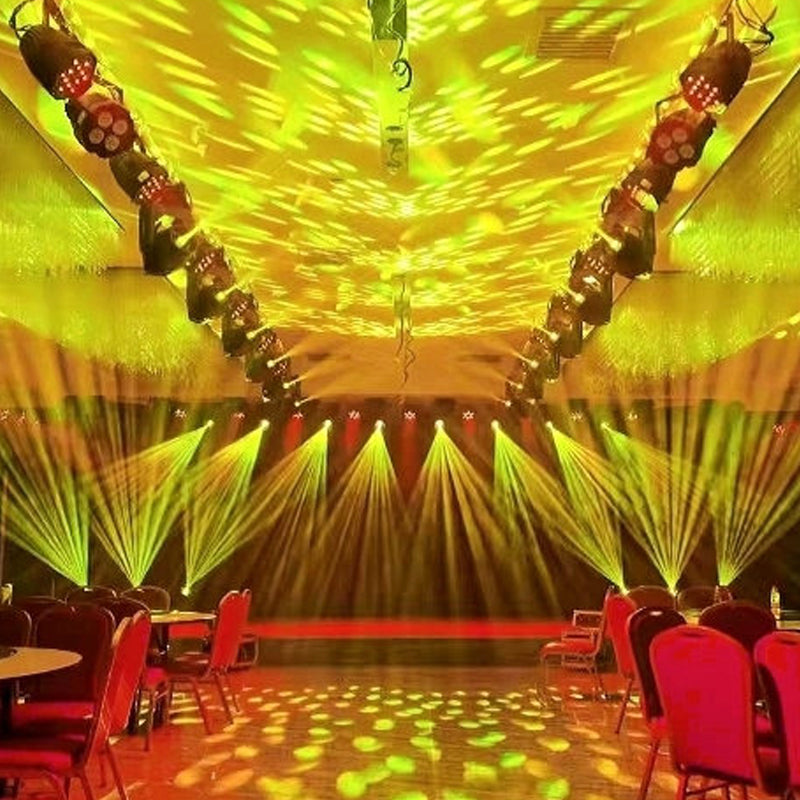
Gobos (pattern projectors) transform blank walls into branded canvases—but cheap moving heads drift out of alignment nightly. Invest in 150W+ moving head profiles with prism effects and 16-bit pan/tilt motors. They hold position for months, projecting sharp logos or textures onto dance floors.
Implementation: Mount 2–4 units at opposite ceiling corners for cross-projection. Use custom metal gobos (not glass) for nightclub durability. Program slow 90-second rotations—rapid movement feels chaotic.
Budget: $800–$1,400 per unit
ROI Timeline: 90 days via elevated brand perception justifying 10–15% higher cover charges.
ROI Timeline: 90 days via elevated brand perception justifying 10–15% higher cover charges.
💡 Selection Tip: Prioritize units with ≥540° pan range. Narrow-range heads (<360°) can't cover wide dance floors from single mounting points.
Idea #11: AI-Powered Crowd Density Brightness Adjustment
Manual lighting adjustments lag behind crowd flow. Deploy a $250 Raspberry Pi with a wide-angle camera (privacy-blurred) to analyze real-time crowd density. Auto-dim dance floor lights by 20% when occupancy drops below 40%—cutting energy waste without staff intervention.
Implementation: Use open-source software like OpenCV for density mapping. Link output to DMX controller via Art-Net. Set three thresholds: <40% (dim), 40–80% (standard), >80% (max brightness).
Budget: $280–$400 (Pi + camera + software setup)
ROI Timeline: 50 days via 25–35% energy savings on dynamic circuits.
ROI Timeline: 50 days via 25–35% energy savings on dynamic circuits.
💡 Selection Tip: Position cameras to avoid capturing faces—point downward at floor grids. This complies with GDPR/CCPA while delivering accurate density data.
Idea #12: Rent-to-Own Fixture Financing Models
Upfront costs delay critical upgrades. Partner with lighting vendors offering revenue-share leases: $0 down, pay 8–12% of weekly bottle service revenue for 12 months, then own fixtures outright. Transfers CapEx to OpEx while testing ROI risk-free.
Implementation: Target vendors with certified pre-owned inventory (CE/ROHS verified). Negotiate buyout clauses at 6 months if ROI exceeds projections. Document baseline revenue pre-installation to validate gains.
Budget: $0 initial outlay
ROI Timeline: Immediate—if revenue share < incremental profit from lighting upgrade, you profit from day one.
ROI Timeline: Immediate—if revenue share < incremental profit from lighting upgrade, you profit from day one.
💡 Selection Tip: Avoid leases exceeding 14% revenue share. Industry benchmarks show lighting-driven revenue lifts average 10–18%; anything higher erodes your margin.
Conclusion
These 12 nightclub lighting ideas form a scalable profit stack—not a random checklist. Begin with zero-cost adjustments (Ideas #1–3) to fund mid-tier upgrades (Ideas #4–8). Reinvest those gains into future-proof systems (Ideas #9–12). Within one quarter, your lighting transitions from a cost center to a documented revenue driver. Remember: the goal isn't brighter lights—it's smarter light placement that guides behavior, extends dwell time, and justifies premium pricing. Audit one zone this week using Idea #1's dark zone principle. Measure guest reactions. Then layer in Idea #2's sensors. Compound these micro-wins, and you'll stop wasting money—because every watt will earn its keep.