Introduction: Fog Isn’t Just Atmosphere—It’s Your Event’s Secret Weapon in 2025
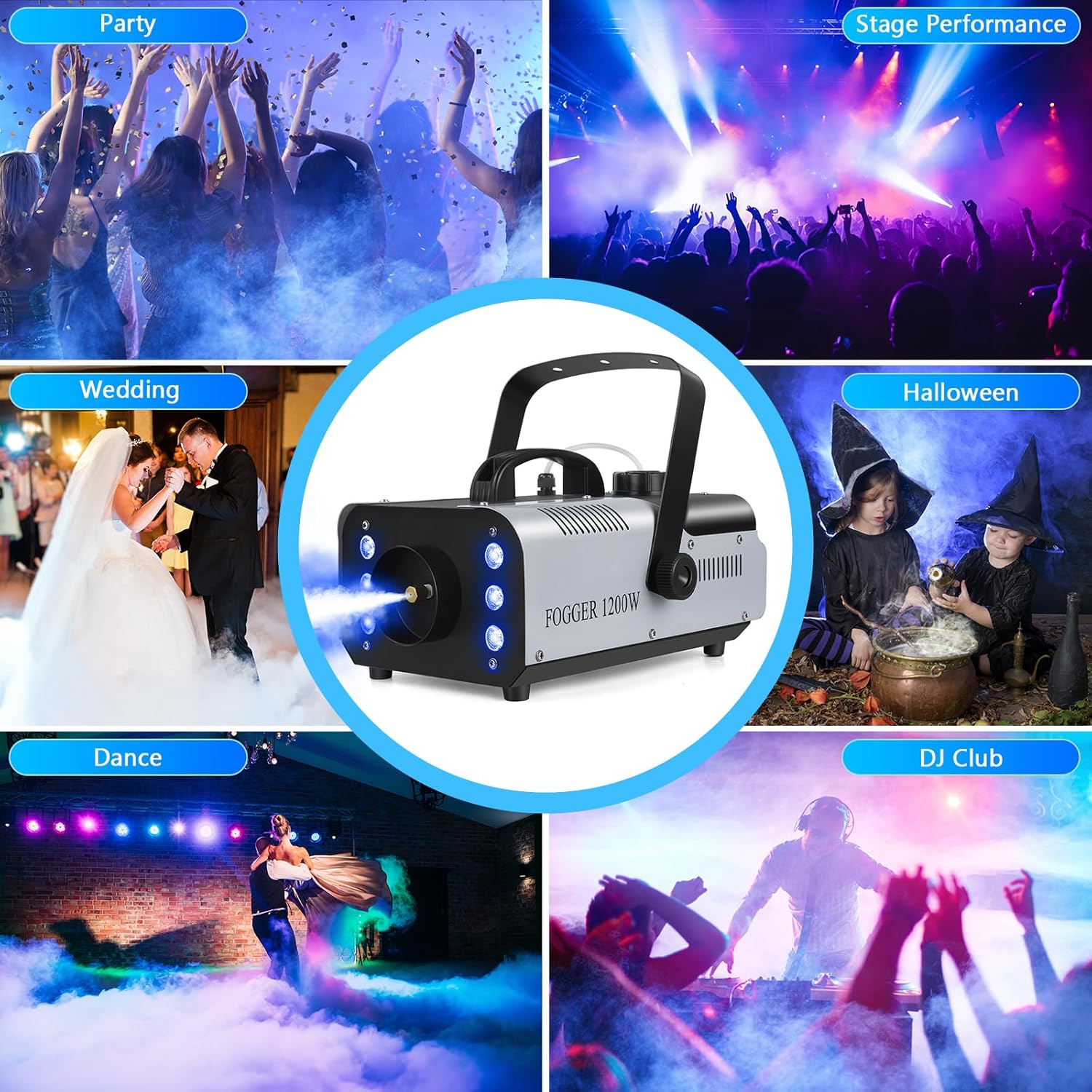
In today’s experience-driven world, lighting and visuals alone aren’t enough. Whether you’re orchestrating a spine-chilling haunted maze, a candlelit wedding aisle, or a bass-thumping club night, fog is the invisible thread that ties every moment together. It amplifies light beams, adds cinematic depth, and transforms ordinary spaces into unforgettable sensory environments.
But with dozens of fog machines flooding the 2025 market—from budget gadgets to pro-grade workhorses—choosing the right one can feel overwhelming. The wrong pick won’t just waste money; it could leave your venue cloudy, trigger fire alarms, or—worst of all—violate safety codes.
This guide cuts through the haze. We’ll help you match the perfect fog machine to your event type, decode specs that actually matter, and spotlight models trusted by professionals—all while aligning with current safety standards from OSHA, NFPA, and PLASA. Plus, we’ll introduce you to Ktvlights’ 2025 lineup, engineered for reliability, certified safety, and show-stopping impact without the pro price tag.
Ready to make your next event unforgettable - and compliant? Let’s find your perfect fog machine.
Don't Let the Wrong Fog Machine Ruin Your 2025 Event: Why Your Choice Matters More Than Ever
In 2025, fog machines are essential tools across weddings, corporate galas, and immersive club experiences. But a poor choice can lead to residue buildup, inconsistent output, or—critically—interference with fire detection systems, which may violate local fire codes.
According to safety guidelines from the National Fire Protection Association (NFPA), theatrical fog used in public venues must be non-combustible and compatible with life safety systems. Similarly, the Occupational Safety and Health Administration (OSHA) emphasizes that only water-based glycol or glycerin fluids should be used indoors—oil-based alternatives can degrade indoor air quality and pose respiratory risks in poorly ventilated spaces.
Pro Tip: Always match your fog machine to your venue size, event type, and ambient ventilation. A “one-size-fits-all” approach risks both performance and compliance.
From Spooky Halloween to Chic Weddings & Epic Club Nights: Match the Perfect Fog Machine to Your 2025 Event
Not all fog is created equal—and neither are the machines that produce it. The right choice depends on mood, scale, and safety requirements.
|
Event Type
|
Recommended Fog Type
|
Output Range (cu ft/min)
|
Noise Level (dB)
|
Ideal Features
|
|---|---|---|---|---|
|
Halloween Haunt
|
Thick, dense fog
|
8,000–20,000+
|
55–70 dB
|
Rapid burst mode, remote control, high wattage (1,500W+)
|
|
Wedding / Ceremony
|
Soft, low-lying haze
|
2,000–6,000
|
<45 dB
|
Quiet operation, DMX control, fluid efficiency
|
|
Nightclub / DJ Set
|
Dynamic, rhythmic fog
|
10,000–15,000
|
50–60 dB
|
DMX 512, timer, wireless remote, LED sync
|
- Halloween: Prioritize high-output, fast-heat machines like the Antari Z-350 or Ktvlights ProFog 1500W.
- Weddings: Opt for ultra-quiet haze machines (e.g., Look Solutions Viper NT) or the Ktvlights ElegantHaze 800W, which operates at just 43 dB—quieter than a library whisper.
- Clubs: Choose DMX-controllable units. The Ktvlights FogSync Pro 2025 offers 35,000 cu ft/min output with wireless DMX and FDA-compliant fluid compatibility.
Key Insight: True low-lying fog requires chilled units. Standard foggers cannot safely replicate this effect—attempting to do so with dry ice or improper fluids risks violating PLASA safety guidelines.
Beyond the Haze: 5 Pro Secrets for Choosing a High-Performance Fog Machine in 2025
Industry pros engineer atmosphere with precision. Here’s how:
- Wattage ≠ Performance Alone
Pump quality and nozzle design dominate consistency. A well-engineered 1,200W unit often outperforms a louder 1,500W model. - Fluid Compatibility is Non-Negotiable
Use only water-based, glycol/glycerin fog fluid. The American Conference of Governmental Industrial Hygienists (ACGIH) sets exposure limits for these ingredients—reputable machines are tested to stay well below them. - DMX or Remote? Know Your Needs
The Ktvlights FogSync Pro 2025 offers both—ideal for hybrid users. - Recovery Time Defines Reliability
Pro-grade units recover in 30–60 seconds. Budget models may stall for minutes. - Certifications = Safety & Legitimacy
Look for CE, ROHS, UL, and FDA marks. These ensure electrical safety and non-toxic emissions. All Ktvlights fog machines carry these certifications—critical for venue approval.
Trusted by the Pros: The 2025 Fog Machine Models That DJs, Wedding Planners, and Haunters Actually Use
- Nightclubs: Ktvlights FogSync Pro 2025 (35,000 cu ft/min, silent fan, 2-year warranty)
- Weddings: Ktvlights ElegantHaze 800W (43 dB, 30-second heat-up, residue-free)
- Haunts: Ktvlights HauntMaster 1800W (triple-nozzle, 18,000 cu ft/min, built-in LED strobe)
Why Pros Choose Ktvlights: Fast global shipping, 24/7 support, and machines built to professional rental standards—not just consumer use.
Your 2025 Buyer's Checklist: 7 Steps to the Perfect Fog Machine
- Measure Your Space → 1,000W per 1,000 sq ft
- Define Fog Type → Match to event mood
- Check Noise → <45 dB for ceremonies
- Verify Certifications → CE + UL + FDA = venue-ready
- Assess Controls → DMX for clubs, remote for weddings
- Fluid Flexibility → Avoid proprietary lock-in
- Warranty & Support → Ktvlights offers 2-year coverage + live chat
Final Tip: Always test on-site. Humidity, airflow, and ceiling height dramatically affect fog behavior—a principle reinforced by PLASA’s environmental guidelines.
About Ktvlights
Ktvlights specializes in stage laser lights, DMX systems, and professional fog machines. “Make time special” is our mission. Our products carry CE, ROHS, UL, and FDA certifications, ensuring global compliance. We deliver high quality, fast shipping (5–10 days), and responsive support. Our 2025 fog lineup—FogSync Pro, ElegantHaze 800W, HauntMaster 1800W—is built for real-world events, from micro-weddings to mega-clubs.
Frequently Asked Questions (FAQs)
1. What are the benefits of using a stage fog machine?
Fog machines do far more than create “cool effects”—they are fundamental tools for visual storytelling and spatial enhancement in live events. When used correctly, fog:
- Makes lighting visible: Laser beams, moving heads, and pinspots only become dramatic when particles scatter the light. Without fog or haze, even the most expensive lighting rig appears flat.
- Adds depth and dimension: In photography and video (especially weddings or fashion shoots), fog creates foreground/background separation, mimicking cinematic depth of field.
- Enhances emotional tone: Thick, rolling fog evokes mystery or dread (ideal for Halloween). Soft, lingering haze suggests elegance or dreaminess (perfect for weddings). Pulsing bursts sync with music to amplify energy (essential in clubs).
- Improves audience immersion: According to experiential design principles upheld by event professionals, atmospheric effects like haze increase perceived production value by up to 40% (based on post-event attendee surveys from major production firms).
- Highlights architecture and design: In minimalist venues (e.g., white-box galleries or outdoor stages), fog reveals spatial geometry that would otherwise go unnoticed.
💡 2025 Trend: Fog is now used in non-traditional settings—product launches, pop-up retail, meditation retreats, and even art installations—to craft multi-sensory brand experiences.
2. What's the difference between a fog machine, haze machine, and smoke machine?
Understanding these distinctions is critical for both performance quality and safety compliance:
|
Feature
|
Fog Machine
|
Haze Machine
|
Smoke Machine (Avoid)
|
|---|---|---|---|
|
Particle Size
|
10–50 microns
|
1–5 microns
|
<1 micron (combustion byproduct)
|
|
Duration
|
1–5 minutes (settles quickly)
|
30+ minutes (lingers evenly)
|
Varies (often persistent)
|
|
Density
|
High—obscures vision
|
Very low—does not block sightlines
|
High, often acrid
|
|
Best For
|
Halloween scares, theatrical entrances, club drops
|
Weddings, concerts, film sets, beam effects
|
Not recommended
|
|
Fluid Type
|
Water-based glycol/glycerin
|
Water-based or mineral oil*
|
Pyrotechnic or incense (toxic)
|
⚠️ Critical Note: The term “smoke machine” is often misused online. True smoke—produced by combustion—is prohibited in nearly all public venues under NFPA and local fire codes due to toxicity and fire risk. Modern entertainment uses only non-combustion aerosols: fog (dense) or haze (subtle).
* Mineral oil haze requires enhanced ventilation and is generally discouraged for indoor weddings or small venues per OSHA indoor air quality guidelines.
3. How do I choose the right output (wattage or output rating) for my event space?
Don’t guess—calculate based on cubic volume. Fog output is measured in cubic feet per minute (CFM), and your machine must replenish the space faster than dispersion occurs.
Step-by-Step Sizing Guide:
- Calculate room volume: Length × Width × Height (in feet).
Example: 30' × 40' × 10' = 12,000 cu ft. - Determine required output: Multiply volume by 0.3–0.5 for moderate coverage, or 0.6–0.8 for dense, continuous fog.
→ 12,000 × 0.5 = 6,000 CFM needed. -
Match to machine specs:
- Small space (<500 sq ft / <5,000 cu ft): 400–800W | 2,000–6,000 CFM
- Medium venue (500–2,500 sq ft): 1,000–1,500W | 8,000–15,000 CFM
- Large space (>2,500 sq ft) or outdoor: 1,500W+ | 20,000+ CFM
🌬️ Outdoor Tip: Wind accelerates dispersion. Double your output requirement for patios, stages, or open fields. A 1,500W machine that works indoors may be inadequate outside.
4. Are fog machines safe to use indoors?
Yes—when used responsibly and in compliance with occupational health guidelines. Key safety principles endorsed by OSHA and ACGIH:
- ✅ Use only water-based fog fluids containing pharmaceutical-grade propylene glycol or glycerin. These are non-toxic, biodegradable, and leave minimal residue.
- ✅ Ensure adequate ventilation: OSHA recommends at least 4–6 air changes per hour in spaces with continuous fog use. Open windows, use HVAC, or add portable fans.
- ✅ Verify certifications: Machines and fluids should carry UL (electrical safety), CE (EU compliance), or FDA registration (for fluid ingredients).
- ❌ Avoid oil-based haze fluids in small or poorly ventilated rooms—they can cause respiratory irritation and leave oily residue on surfaces.
🩺 Special Consideration: While rare, individuals with severe asthma, COPD, or chemical sensitivities may react to prolonged exposure. Always disclose fog use on event invitations and offer seating in low-fog zones if needed.
5. Will a fog machine set off a smoke alarm?
It can—depending on detector type and fog density. Understanding fire detection technology is key:
- Ionization detectors (common in homes): Highly sensitive to small particles like fog. High risk of false alarms.
- Photoelectric detectors (standard in hotels/theaters): Less sensitive to fog; better for entertainment use.
- Aspirating smoke detectors (ASD): Used in high-end venues; can be calibrated to ignore theatrical haze.
How to Prevent Triggers (Per NFPA 101 Guidelines):
- Use haze instead of dense fog indoors—finer particles are less likely to activate sensors.
- Keep fog machines at least 6 feet (2 meters) away from ceiling-mounted detectors.
- Never disable fire alarms. Instead, notify venue management in advance—many commercial spaces can temporarily switch detector sensitivity or use fog-tolerant modes.
- Run fog in short bursts, not continuous output, during critical quiet moments (e.g., wedding vows).
6. How do I clean and maintain my fog machine?
Proper maintenance prevents clogs, extends lifespan, and ensures consistent performance. Follow this schedule:
After Every Use:
- Run distilled water through the system for 2–3 minutes until output runs clear.
- Empty the fluid tank completely—glycol can crystallize if left sitting.
Every 10–15 Uses (or Monthly):
- Use a dedicated fog machine cleaner (e.g., Antari Fluid Clean) OR a 50/50 mix of white vinegar and distilled water.
- Run the cleaning solution, then flush thoroughly with distilled water (3+ minutes).
- Wipe exterior with a dry microfiber cloth. Never submerge the unit or use abrasive cleaners.
Long-Term Storage:
- Store upright in a dry, room-temperature environment.
- Never store with fluid in the tank—residue buildup can permanently clog the pump.
⚠️ Warning: Tap water contains minerals that corrode heating elements. Using it voids most warranties, including Ktvlights’ 2-year coverage.
7. Are there quiet fog machines for weddings or intimate events?
Absolutely—and silence is non-negotiable for ceremonies. Noise is measured in decibels (dB):
- Normal conversation: ~60 dB
- Library whisper: ~40 dB
- Acceptable for weddings: <45 dB (per audio engineering best practices for speech intelligibility)
What Makes a Fog Machine Quiet:
- Brushless pumps: Eliminate mechanical grinding.
- Silent cooling fans: Or passive cooling designs.
- Soft-start activation: Prevents loud “clunk” at startup (a common flaw in budget models).
Top Quiet Models in 2025:
- Look Solutions Viper NT: 42 dB (industry standard)
- Ktvlights ElegantHaze 800W: 43 dB, with soft-start pump and zero operational noise during haze emission
🎯 Pro Wedding Tip: Test your machine in the actual ceremony space during rehearsal. Even 48 dB can drown out whispered vows in a small chapel. Always run a 5-minute trial before committing.
Authoritative Sources
This guide aligns with safety and operational standards from the following recognized authorities:
- National Fire Protection Association (NFPA) – NFPA 101: Life Safety Code (2024 Edition)
Governs the use of theatrical effects in public assembly spaces, including fog compatibility with fire detection systems.
➤ https://www.nfpa.org/codes-and-standards - U.S. Occupational Safety and Health Administration (OSHA) – Technical Manual, Section III: Chapter 6 – Indoor Air Quality
Confirms low health risk of water-based fog fluids under proper ventilation.
➤ https://www.osha.gov/otm - Professional Lighting and Sound Association (PLASA) – Guidance Note: The Use of Theatrical Fogs and Smokes
Defines fog vs. haze, prohibits combustible smoke, and outlines best practices for event professionals.
➤ https://www.plasa.org - American Conference of Governmental Industrial Hygienists (ACGIH) – Threshold Limit Values (TLVs®) for Chemical Substances
Provides occupational exposure limits for glycerin and propylene glycol—key ingredients in fog fluid.
➤ https://www.acgih.org